Tuesday, September 13, 2011

Harriet Jacobs


Incidents in the Life of a Slave Girl is a work written by Harriet Jacobs. We are introduced to the antagonist of the story, Linda, who is a young orphaned slave for Dr. Flint. We learn quickly that Dr. Flint is raping Linda. Linda hates her master for what he does to her, but her hatred is futile as she is too ashamed and scared to say anything. The doctor pays special attention to Linda, never beating her and giving her special treatment. This special treatment breeds jealousy, hatred, and contempt in the doctor’s wife. One day the mistress sits down with Linda and gets Linda to tell her everything that has happened between her and the doctor, furthering the hatred the mistress feels towards Linda. The story continues as Linda speaks of her love life. She wants to marry a free slave, but is denied by her master. In an attempt to spite her master, Linda becomes impregnated by another white man named Mr. Sands. Eventually, Linda would have two children with Mr. Sands, Benjamin and Ellen, respectively. Linda constantly tries to think of ways to get her freedom throughout the story, especially now that she has children, but is always denied by Dr. Flint. Eventually, Linda is forced to move to a new plantation with Dr. Flint’s daughter, her true owner. While here, she eventually learns of the Flint family’s plans to never set her or her children free, keeping them in slavery forever. So, in final attempt to save her children from slavery, Linda makes the ultimate sacrifice by running away from the plantation, never to see her children again, to go in hiding so that her children may one day be bought and freed.
                The first thing that struck me about this story is that not only is it written by a slave, but it is also the first work written by a female we have discussed. Why did she refer to herself as Linda and not Harriet? The story struck me as another coming-of-age story, much like My Kinsman, Major Molineux.  I found it disgusting to find that female slaves in the south were treated in such a horrible manner. However, I believe Jacobs willingly had relations with Dr. Flint in order to avoid being treated as harshly as normal slaves did. That being said, I wonder if I would have done the same thing in her position? Also interesting was the way she talked back to Dr. Flint, telling her she hated and despised him and exercised some control over him. Dr. Flint often said he could kill her, but never once struck her until very late in the story. It was interesting to see them exercise power over each other in very different ways. It became pretty evident to me that Dr. Flint truly had feelings for Linda. For instance, when Dr. Flint learns of Linda’s first love and Mr. Sands, he asks if she loves both of them.
                The mistress or wife also had much power. She knew what was going on, yet remained with her husband. With all of the talk about interracial babies, it seems that owner-slave relationships was quite a common practice in the south. I also found it interesting that Linda’s grandmother had such authority that Dr. Flint seemed to be scared of her. She often argued with Dr. Flint.  

Sunday, September 11, 2011

Whitman-Song of Myself


                I found Whitman’s Song of Myself to be a bit confusing. Essentially, I think what Whitman is trying to convey in his work is that life is great. There is nothing better than living, and you should make the most of it while you can. In his work, Whitman relates countless stories that have occurred in his life and numerous things he has seen in his time (especially lines 266-321). In lines 219-224, Whitman describes the work of a Blacksmith with a sense of beauty. This is a job not typically thought of as beautiful, but Whitman finds beauty and purpose pretty much everywhere he looks. All of these events have shaped Whitman and made him who he is and the way he is
Up until section 11, I found myself confused as to what Whitman was trying to convey. I think he was conveying the greatness of life, as I stated before, but there are certain parts like lines 52-54 where I feel like Whitman is just talking in riddles. Also, in section 4, I found myself confused. I felt the entire work Whitman was giving accounts of things that shaped him, but the first part (lines 66-74) of part 4 make it seem like everything in life influence and affect Whitman (as I stated) but don’t necessarily make the person. This kind of goes against everything I thought.
I found Whitman to be a very tolerant individual. This is evidenced in the fact that helped a run-away (line 189). In all the previous stories we read, run-aways were frowned upon and never helped. Also, when Whitman describes the Negro doing his work, he is very admiring in his tone. Both of these acts were kind of unheard of from this time period, so it just surprised me to discover these things.
I’m not quite sure I understood Whitman’s explanation of the grass either. I think he is trying to say that it could be anything, as in who is to say what anything truly is? His explanation kind of reminds me of when you go outside and look up at the stars and you get that sense of wonder and awe because you can’t even fathom how far they reach or how many they are. It kind of puts life in perspective. There is just so much that we don’t know and maybe aren’t meant to figure out.
Other points of confusion for me were lines 139-144; they completely baffled me! Also, in lines 154-161, is Whitman describing a murder or death? I wasn’t sure what Whitman was trying to convey in lines 199-216, either.

Thursday, September 8, 2011

Emerson


Emerson was one of the most influential writers during the Transcendentalist movement. During this movement, society strayed away from unity solely under the church and focused more on individualism and individual spirituality, as we discussed in class. The excerpt from Emerson’s self-reliance is loaded with his views on individuality. Right from the start in the first paragraph Emerson states, “To believe your own thought, to believe that what is true for you in your private heart is true for all men,--that is genius.” I think what Emerson is saying is that you have to establish your own beliefs and ideas instead of just conforming and adopting others’ beliefs. To back up his claims, Emerson lists prominent figures such as Moses and Plato who originated Transcendentalism.
 It took me a couple of times through to understand Emerson’s points, but once you comprehend his words you can really see the genius he applies. For instance, one line that truly spoke to me was line 68:  “These are the voices which we hear in solitude, but they grow faint and inaudible as we enter into the world.” I think Emerson is manifesting the idea that people are so good at developing ideas and values they see as right when they are alone, but forget all of it once they go out into society. Emerson goes on in the next paragraph to stress the importance of being good from within. This reminded me of Ben Franklin’s autobiography and his attempt to live nobly via his virtues. However, I am a little confused as the story goes on and Emerson discusses how man is separate from his virtues in line 108. I think what Emerson is trying to convey here is that man should do good deeds or adhere to virtues for the goodness of himself, not to please other people.  Another portion of the story that reminded me of Ben Franklin was line 131 when Emerson speaks of religion and states, “If I know your sect, I anticipate your argument.”  Like Franklin, Emerson questions the one-sided arguments preachers and the church present and wonder if the church is looking to better the people (as it is supposed to do) or better itself (through followers and finance).
I’m no history buff, so I would really like to discuss what is going on in the world at this time causing such a strong push for individuality and non-conformity. Does it have to do with religion? It seemed to me that a lot of what Emerson felt was tied to God. If I remember from class correctly, Transcendentalists wanted to establish a more personal relationship with God. One part of the story I didn’t feel like fit very well (at least not in the sense of individuality) is Emerson’s paragraphs on the youth and the children. Is he saying that the youth and children are just as important and influential as adults? If so, this reminds me quite a lot of Ben Franklin’s autobiography and how he placed such importance on the youth.  
Honestly, I found this to be a bit redundant. I think Emerson’s objective was to hammer the point of being an individual; especially thinking for oneself and not trying to please other people. Although redundant, I think a lot of what Emerson says is very true. It’s easy to get caught up in the world, especially peer pressure and become very lax and let other people influence the way we act, feel, and even think.

Tuesday, September 6, 2011

Hawthorne


The story begins with a bit of a preface, much like all of the other stories we’ve read. The “preface” describes the appointment of colonial governors by the kings of Great Britain and goes on to describe how the people of the American colonies did not particularly care for the governors as they controlled rather harshly.
                We are introduced to the main character, a young man named Robin, on a ferry as he is traveling to find his wealthy and prestigious uncle, Major Molineux. We are taken on Robin’s journey as he enters the town and asks where his kinsman is, a question to which no one seems to have the answer. The first peculiar even that occurs when Robin asks about Molineux’s whereabouts is when Robin asks the man in front of the barbershop if he will lead him to Molineux and the barbers stop mid-haircut/shave to overhear his conversation. His question must have sparked quite the controversy to make a barber stop mid-haircut. The next time Robin asks to be led to Molineux is in the tavern. At first, I found it odd Robin “felt a sort of brotherhood with these strangers,” but later realized he felt this way because the “strangers” isolated themselves in a corner, something Robin could relate to. While in the tavern, the innkeeper questions Robin and his tattered clothes, believing he is a runaway servant. This reminded me of Sot-Weed and Ben Franklin’s Autobiography.
                One portion of the story I didn’t understand was the significance of the woman. She seemed to be a bit of a harlot as she tried to seduce Robin. Was she a prostitute? Also, after Robin talks to the two-faced man, what does it mean when he refers to him as “genus homo?” Another thing I found peculiar is the fact Hawthorne puts Robin’s thoughts in single lines/separate paragraphs like a monologue.
                In the end, Robin finally sees Major Molineux. I’m not sure what is happing to Molineux, however. I believe the townspeople are humiliating him as he is described as being in “tar-and-feather dignity.” Is he literally tarred and then feathered to look like a chicken? I think Molineux must have been one of the colonial governors and the citizens disliked him for that reason. This would explain why everyone was so rude to Robin when he asked about Molineux. I wonder if Robin was sent by his father to really meet Molineux, or to make him a man and have him start his own life. Perhaps, his father wanted to show Robin the life Molineux led was not all Robin was expecting. Finally, I found myself wondering how this story really connected with Romanticism.

Romanticism

My high school English teachers always described Romanticism as everything being ideal. According to the article, Romanticism focused more on “intuition, imagination, and feeling,” and came after Rationalism. Romantics were less concerned about everything being proven and factual and more concerned with how things felt, seemed, and should be. The idea of Romanticism gave followers a better understanding of themselves. It made followers believe they were special as individuals and gave them a better appreciation of life and the world.
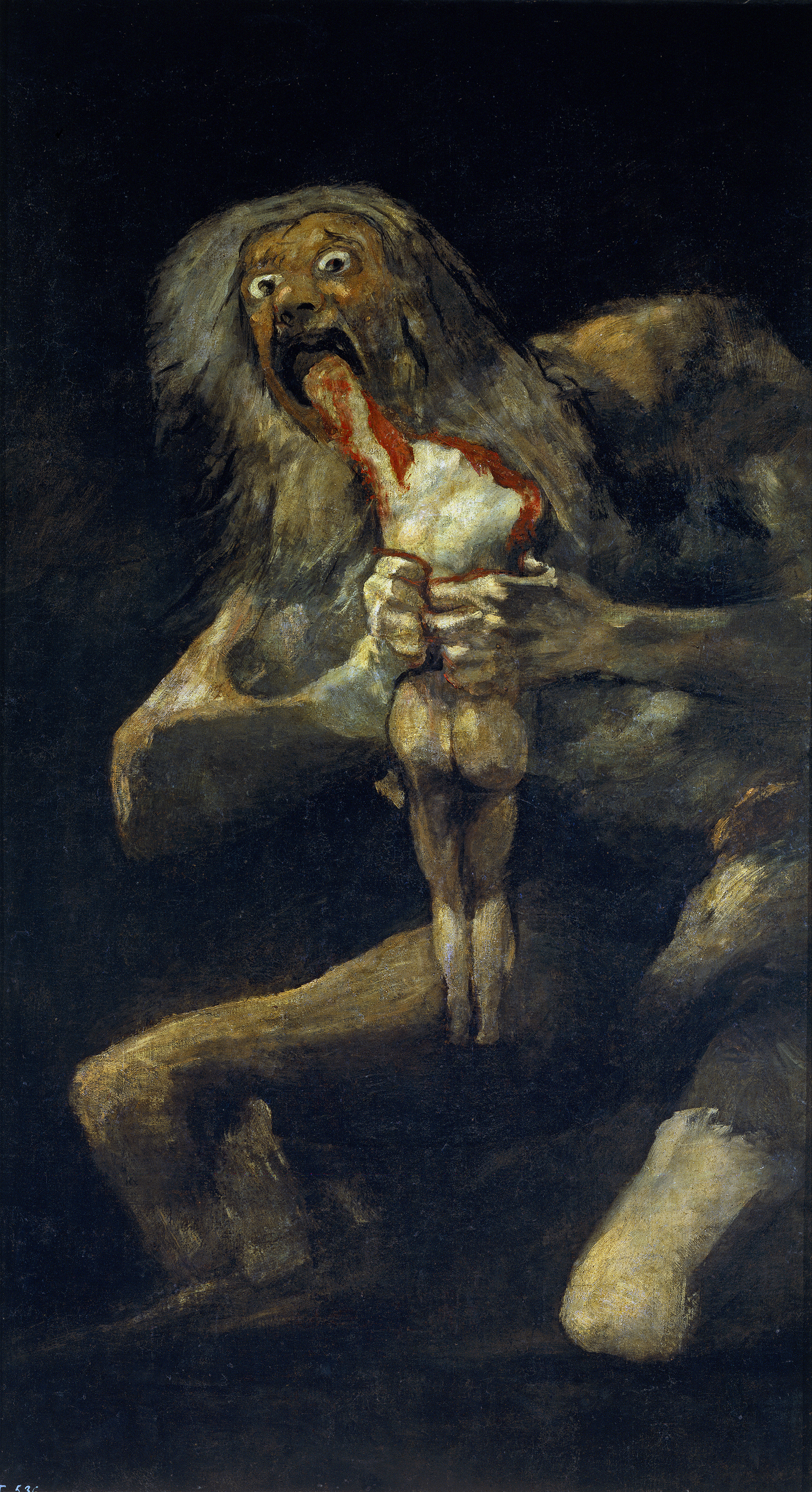
                The article explains Romanticism as "an artistic, literary, and intellectual movement...embodied most strongly in the visual arts, music, and literature..." Romantic composers include figures such as Mozart, Beethoven, and Chopin; all of which are renowned figures in classical music. When we think of classical music, these composers and some of their works are the first that come to mind because there is such an inherent beauty about them. As far as literature goes, some famous authors include Edgar Allen Poe and Washington Irving. Because of Romanticism, these authors could portray more emotion than ever before. The authors related their characters to everyday life and its struggles, appealing to a more general audience. Romanticism also changed the way artist’s painted. One famous painter from the Romantic era that I recognized was Francisco De Goya. I remember seeing one of his paintings in my art appreciation class and finding it very odd. The painting I am speaking of is Saturn Devouring His Son. This work is a bit disturbing, but De Goya was able to express himself without inhibitions thanks to the ideas of Romanticism. Romanticism also helped instill national pride, which is a common reflection in many artists’ paintings of the time.
                All in all, I think the Romantic era was a great time period. I believe it helped give birth to an entirely new and different style of thinking. Before, things were interpreted and thought of very literally, scientifically, and matter-of-factly. With Romanticism, things were more free-spirited which gave rise to self-expression. Some of the greatest works in literature, art, and music came from this time period because people were no longer limited in how they expressed themselves.

Monday, September 5, 2011

One Hundred Per Cent American


                The first time I read through One Hundred Per Cent American, I found it to be quite humorous. I never really noticed or sat down to think how many things we are so accustomed to using come from other places. The American citizen the author talks about made it through breakfast without using anything originally created in America, hence the irony in the title. Speaking of the title, I wonder if the ‘Per Cent’ portion is the author’s attempt at a pun on the word ‘percent.’ If so, I think the author is referring to the amount of pennies in a dollar, saying that these “pure-blood” Americans are really only about 1/100 percent American.
                Upon further reading, the work really became a little disturbing to me. When you really consider all of the customs and items we use that are foreign, the author’s tone becomes less humorous and more sarcastic. Everything from the bed we sleep in to the food we eat did not originate in America. The general consensus in the world used to be that America was superior to all other countries. However, this work shows that to be very different. I also think this work reflects the changing times. Most of the goods we have today are imported from other countries. If I were to look in my closet right now, the majority of the tags in my shirts would read, “Made in (insert foreign country here).”  Even the majority of automobiles are now manufactured by foreign companies. Essentially, this article worries me because when you really stop to think about it, what is made in America?